


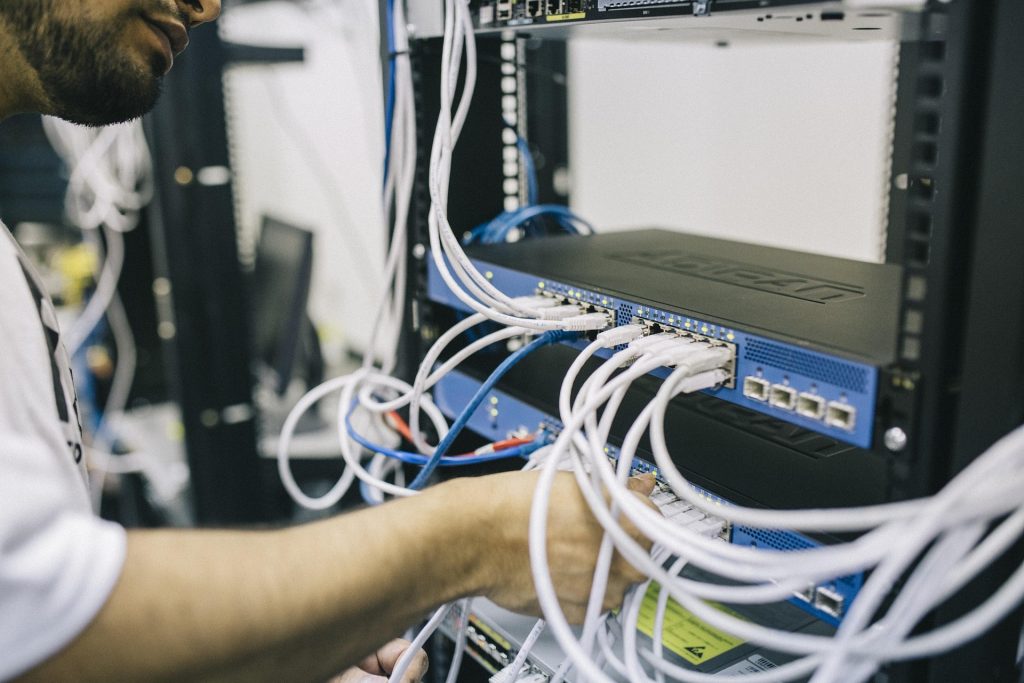
The Importance of Regular Cabling Audits in New York City, NY
Regular cabling audits help NYC businesses prevent outages, improve IT safety, and keep networks easy to support. In dense buildings with shared closets and constant changes, small cabling problems can create big downtime. This guide explains what cabling audits include, how UniFi visibility helps, and what to expect from a professional network assessment near you.
What Is the UniFi Ecosystem and Why Businesses Choose It for Cabling Audits
The Ubiquiti UniFi ecosystem is a set of networking products managed through a central controller. Instead of using separate dashboards for routing, switching, and WiFi, UniFi brings visibility into one place. As a result, teams can standardize configurations and troubleshoot faster across offices, floors, or multiple sites.
How UniFi visibility supports Cabling Audits and network assessment
UniFi doesn’t replace physical testing, but it helps you spot symptoms early. For example, UniFi switches can show port errors, link speed changes, and PoE draw. Meanwhile, the controller can highlight repeated disconnects and unstable clients. During Cabling Audits, those signals help narrow the search to specific ports and pathways.
UniFi components reviewed during Cabling Audits (controllers, switches, VLANs)
- UniFi controllers manage device settings, firmware, and alerts.
- UniFi gateways provide routing and firewall controls at the network edge.
- UniFi switches connect endpoints and often deliver Power over Ethernet (PoE).
- UniFi access points provide WiFi, but they rely on stable wired uplinks.
- VLANs separate traffic for staff, guest, and IoT devices to improve network security.
Complete UniFi Network Services We Provide in New York City (Cabling Included)
UniFi Nerds supports businesses across New York City and nearby areas. If you searched “cabling audit near me,” “network assessment near me,” or “UniFi support near me,” these are the services we commonly provide.
NYC Cabling and IT safety services we deliver
- Structured cabling planning, installation, cleanup, and labeling
- Cable testing and certification for performance verification
- WiFi design and UniFi access point deployment
- Switching and PoE planning for cameras, access points, and phones
- Gateway/firewall configuration and secure remote access planning
- VLAN segmentation for staff, guest, and IoT networks
- UniFi Protect camera networks and recording design
- UniFi Access door access control network design
- Ongoing monitoring and support
Regular cabling audits fit naturally into these services because they reduce downtime and keep the physical layer supportable as your business changes.
How Our UniFi Deployment Process Works to Support Future Cabling Audits
A strong deployment process makes audits easier later. In NYC, that matters because building access windows and shared closets can limit when work can happen. So, we build consistency from the start.
Step 1: Baseline network assessment for Cabling Audits in NYC
First, we confirm device locations, cable pathways, and closet conditions. Next, we review switch capacity, PoE needs, and uplinks. Then we document what exists so the plan stays realistic.
Step 2: Labeling and documentation standards that speed up Cabling Audits
We set a labeling standard for patch panels, jacks, and cables. We also create port maps that match real endpoints. As a result, future cabling audits move faster and cause less disruption.
Step 3: VLANs and network security design for IT safety
Next, we design VLANs to separate staff, guest, and IoT traffic. Then we apply firewall rules at the UniFi gateway to control what can talk to what. This improves network security and supports IT safety goals.
Step 4: Cabling testing and PoE validation for audit-ready reliability
Finally, we test cabling, validate PoE stability, and confirm device connectivity. We also verify that the UniFi controller shows stable ports and clients. That baseline makes future audits more accurate.
Why Businesses in New York City Need Cabling Audits and Professionally Designed Infrastructure
NYC environments create real cabling risks: older construction, tight risers, shared closets, and frequent tenant changes. Because of that, regular Cabling Audits protect both uptime and IT Safety. They also reduce the chance that a small issue turns into a full outage.
Cabling Audits checklist for IT safety and network assessment
- Closet organization: Patch panels, cable management, and clear labeling
- Physical condition: Tight bends, crushed cables, exposed pathways, and strain relief
- Patch cord quality: Correct length, good connectors, and consistent standards
- Testing results: Identify weak runs that pass basic checks but fail under load
- PoE stability: Confirm endpoints draw power consistently and don’t reboot
- Port mapping: Confirm switch ports match the documentation
- Segmentation review: Validate VLANs and firewall rules support security goals
Real-world Cabling Audits example in NYC: the “mystery patch panel”
A common NYC scenario is inheriting a closet with unlabeled ports and unknown cable paths. During an audit, we trace runs, rebuild port maps, and label patch panels so future changes stay safe. Then we validate PoE endpoints like access points and cameras. The result is fewer outages and faster troubleshooting when something changes.
Common Network Problems We Solve With Cabling Audits
Audits often reveal the root cause of recurring issues. So, instead of treating symptoms, we fix the physical layer and confirm the network design supports it.
Random disconnects and link flaps found during Cabling Audits
Link flaps can come from loose terminations, damaged patch cords, or tight bends. UniFi switch logs can point to the port, while physical testing confirms the failing segment. After repairs, we re-test to confirm stability.
PoE reboots uncovered by Cabling Audits (access points, cameras, access control)
PoE endpoints may reboot when a cable run is marginal or when the switch PoE budget is tight. During audits, we confirm PoE draw, validate terminations, and check that the switch configuration matches the endpoint needs.
Security gaps revealed in a network assessment (VLANs and firewall rules)
When everything shares one network, risk increases and troubleshooting slows down. We use VLANs to separate staff, guest, and IoT traffic. Then we apply gateway firewall rules to limit access between networks, which improves network security.
Industries We Serve in NYC That Benefit From Cabling Audits
Cabling audits help any business. Still, some NYC industries benefit more because downtime affects safety, compliance, or revenue.
Industries where Cabling improve IT safety and reliability
- Healthcare clinics: Segmentation and documentation that supports compliance-focused operations
- Retail: Stable POS connectivity, guest WiFi, and camera-ready PoE design
- Hospitality: Dense WiFi environments and segmented back-of-house networks
- Professional services: Secure networks and stable conferencing
- Multi-tenant buildings: Closet standardization and clear port mapping in shared spaces
If you manage one of these environments and you’re searching for a “network assessment near me” in New York City, a cabling audit is a practical starting point.
UniFi vs Traditional Networking Solutions for Cabling
Traditional networks often use separate tools for routing, switching, WiFi, and monitoring. That can work. However, UniFi simplifies visibility by bringing key information into one controller experience. During audits, that visibility helps you connect physical findings to real network behavior.
Where UniFi helps most during Cabling in NYC
- Port insights: Link speed changes, errors, and PoE draw can point to weak runs.
- Client history: Repeated disconnect patterns can highlight problem areas.
- Segmentation visibility: VLAN and firewall rules stay easier to review and maintain.
Still, no dashboard can fix damaged cabling. That’s why audits combine UniFi visibility with physical inspection and testing.
Key Takeaways From Cabling Audits
- Cabling Audits reduce downtime by catching weak runs and messy closets early.
- IT safety improves when pathways, strain relief, and closet organization are maintained.
- Network assessment should include testing, port mapping, and PoE validation.
- UniFi visibility helps you spot symptoms and focus the audit on the right ports.
- VLANs and firewall rules support network security and reduce risk from IoT devices.
Frequently Asked Questions About UniFi Network Services and Cabling Audits
1) How often should a business schedule Cabling Audits in NYC?
Many businesses do well with a quick visual check every quarter and a deeper cabling audit once or twice a year. If you move offices, renovate, or add PoE devices like cameras and access points, schedule an audit sooner. In NYC, shared closets and risers add risk, so regular reviews help catch issues early. A good audit also updates documentation, which makes future troubleshooting faster and safer.
2) What’s the difference between Cabling and a full network assessment?
A cabling audit focuses on the physical layer: closets, patch panels, labeling, pathways, and cable testing. A full network assessment includes cabling plus switching, WiFi design, gateway security settings, and VLAN segmentation. In practice, the two overlap because physical issues often cause network symptoms. For UniFi environments, combining both can be efficient because the controller provides visibility into ports and clients while you test and inspect the cabling.
3) Can UniFi logs really point to cabling problems found in Cabling Audits?
UniFi logs and dashboards can show symptoms that often relate to cabling, such as link flaps, port errors, and repeated disconnects. For example, if one switch port shows frequent link up/down events, that can indicate a loose termination or a failing patch cord. However, you still need physical testing to confirm the cause. Think of UniFi as a fast way to narrow the search, while the audit proves the physical layer is healthy.
4) How do Cabling Audits improve network security and IT safety?
Audits improve security by making the network easier to understand and control. Clear port mapping and labeling reduce the chance that unknown devices get connected to sensitive networks. In addition, audits often include a review of VLAN segmentation and gateway firewall rules, which helps keep guest and IoT traffic away from staff systems. When the physical layer is organized, it’s also easier to enforce standards and spot unauthorized changes.
5) When should I call a professional for Cabling near me in NYC?
Call a professional when you see repeat outages, PoE reboots, or slow troubleshooting due to messy closets and missing labels. You should also schedule an audit if you inherit a space from a prior tenant, expand to another floor, or add cameras and access control. A qualified team can trace unknown runs, test cabling, rebuild port maps, and confirm VLAN and firewall settings support your security goals. If you searched “cabling audits near me” in New York City, a site survey is a practical first step.
6) What should I prepare before Cabling to make the network assessment faster?
Gather any existing network diagrams, port maps, and closet photos. If you use UniFi, export or screenshot switch port views and note any ports that show errors or repeated disconnects. Also, list critical endpoints such as cameras, access points, POS systems, and access control. Finally, confirm building access rules for telecom closets and risers. With that prep, the audit can focus on the highest-impact areas first.
Schedule Your Free Site Survey
Contact UniFi Nerds for a comprehensive network assessment and professional advice tailored to your office or business network
Call: 833-469-6373 or 516-606-3774 | Text: 516-606-3774 or 772-200-2600
Email: hello@unifinerds.com | Visit: unifinerds.com
Free consultations • Phased implementation • Budget-friendly • Testing & documentation